Overview
Coachscribe is an AI-powered sports coaching platform designed to help teams turn large amounts of performance data into actionable insights.
When I joined the team, the product had been developed with an AI-first approach. Although the technology offered significant potential, early customer feedback revealed a fundamental problem: coaches were struggling to understand what the product was telling them, what they were supposed to do with it, and how it fitted into their existing workflows.
My role was to help bring the product back to the needs of its users — combining UX research, product strategy, information architecture and product design to create a simpler, more focused coaching experience. I worked across the product from discovery through to product definition and design, collaborating closely with the founders and wider team.
The Challenge
When more data doesn't mean more insight
Coachscribe had ambitious technology behind it, but the experience was becoming increasingly complex.
The product exposed coaches to large amounts of data and AI-generated analysis, but more information wasn't necessarily helping them make better decisions.
The challenge was therefore bigger than improving individual screens.
I needed to understand:
What information do coaches actually need?
When and why do they need it?
Which insights are genuinely actionable?
How much complexity can they reasonably absorb?
How should AI support a coach rather than compete for their attention?
How could the product work across different sports, teams and coaching contexts?
The goal became to move from an AI-first product towards a coach-first product.
Starting with the people, not the interface
I worked with the team to understand the needs behind the product.
I conducted research across different roles and sporting contexts, including conversations with sales, coaches and performance/data professionals, alongside testing with participants from organisations including Yale Men's Golf, Stanford Women's Volleyball and the New York Giants.
Rather than asking simply "Do you like this interface?", I focused on understanding how people actually work:
What are they trying to achieve?
What information do they trust?
Where do they struggle?
What decisions are they trying to make?
This helped expose a key tension in the product:
Coaches didn't necessarily need more analysis. They needed the right analysis, presented at the right moment, with enough context to understand what to do next.

CAs in a store in Shanghai.
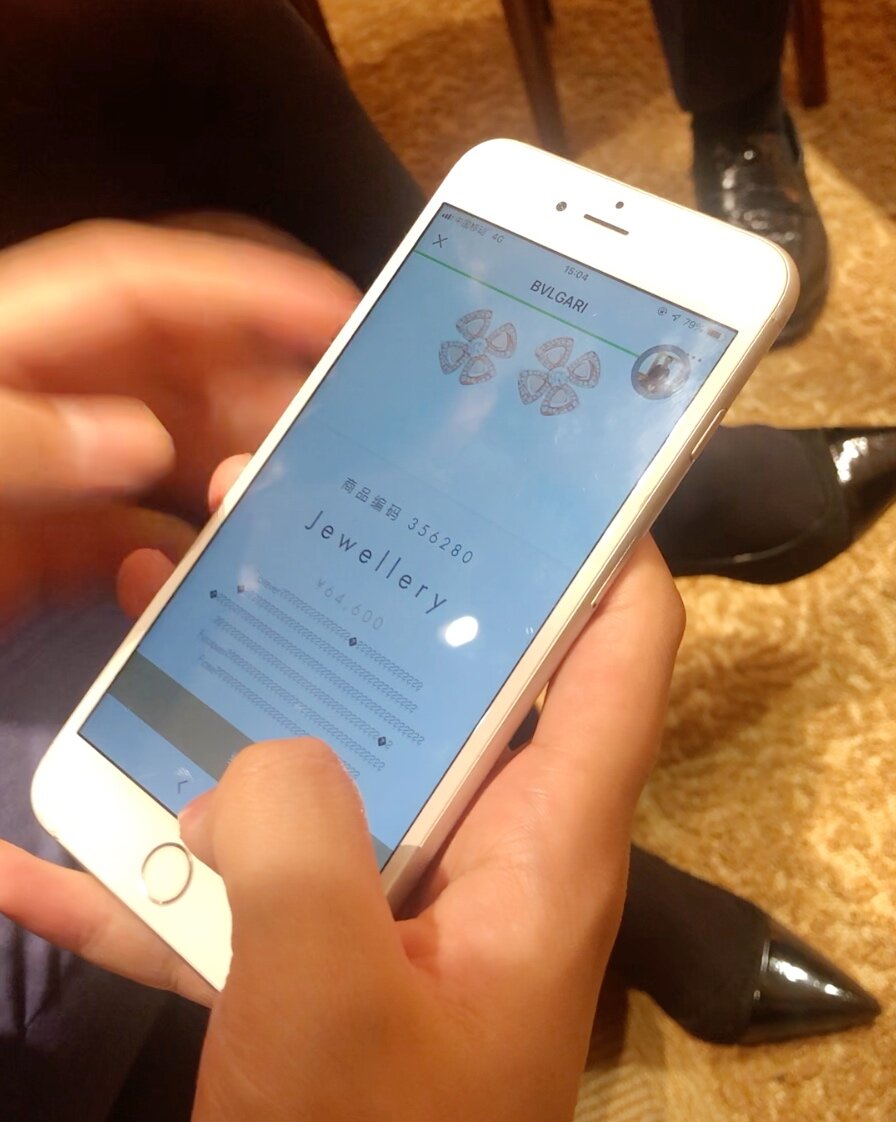
Client Advisors showing the “Selling Ceremony” during an interview.

Store visits’ insights grouped by theme.
Four principles for a clearer product
The research led me to establish four principles to guide the product experience:
1 - Clarity
Reduce cognitive load and make the most important information immediately understandable.
2 - Explainability
When AI makes a recommendation or surfaces an insight, coaches need to understand why.
3 - Guidance
Move beyond presenting information towards helping coaches understand what they could do next.
4 - Team identity
The product shouldn't feel like a generic analytics dashboard. It should reflect the way a team actually works and thinks.
These principles became a framework for evaluating both existing features and future product ideas.
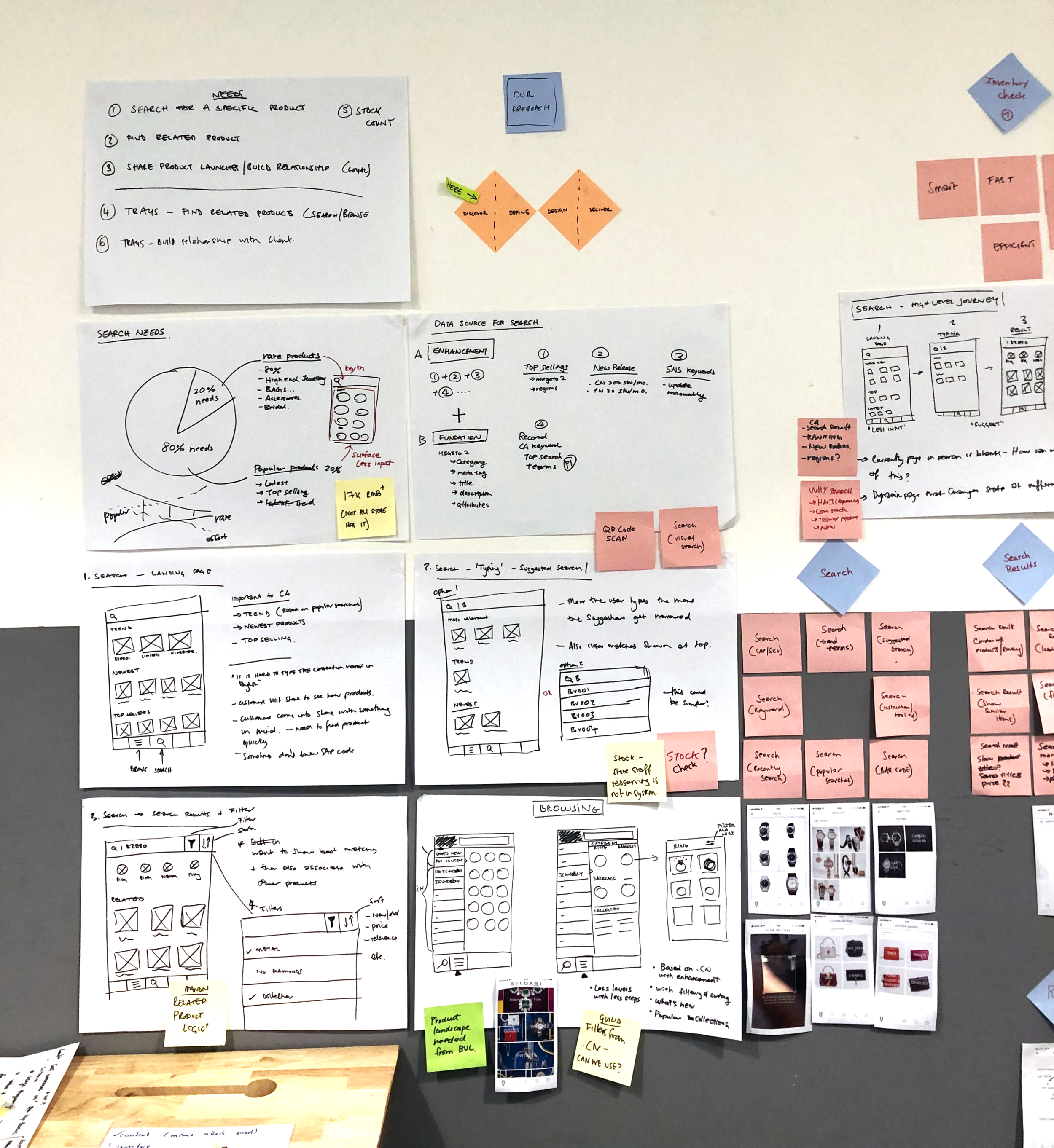
The first part of the presentation wall.
From dashboards to decisions
One of the biggest opportunities was reducing the amount of information competing for attention.
I recommended reducing the amount of visible data by around 30%, prioritising the insights most relevant to the coach's immediate task.
I also explored ways of structuring the experience around coaching moments rather than simply around datasets.
One example was the concept of a Game/Event Gap: instead of forcing coaches to interpret multiple layers of data themselves, the product could help surface meaningful differences between events and turn them into a clearer coaching conversation.
The objective wasn't to hide the complexity of the underlying technology.
It was to absorb that complexity on behalf of the user.
Designing for different coaching contexts
The research also revealed that coaches didn't all interact with the product in the same way.
This led to a rethink of the relationship between mobile and web.
Rather than treating mobile as simply a smaller version of the desktop product, I explored a more deliberate split:
Mobile → immediate, lightweight coaching insights
Web → deeper analysis, comparison and exploration
I also explored features such as 7-day comparisons, helping coaches understand change over time rather than presenting isolated data points.
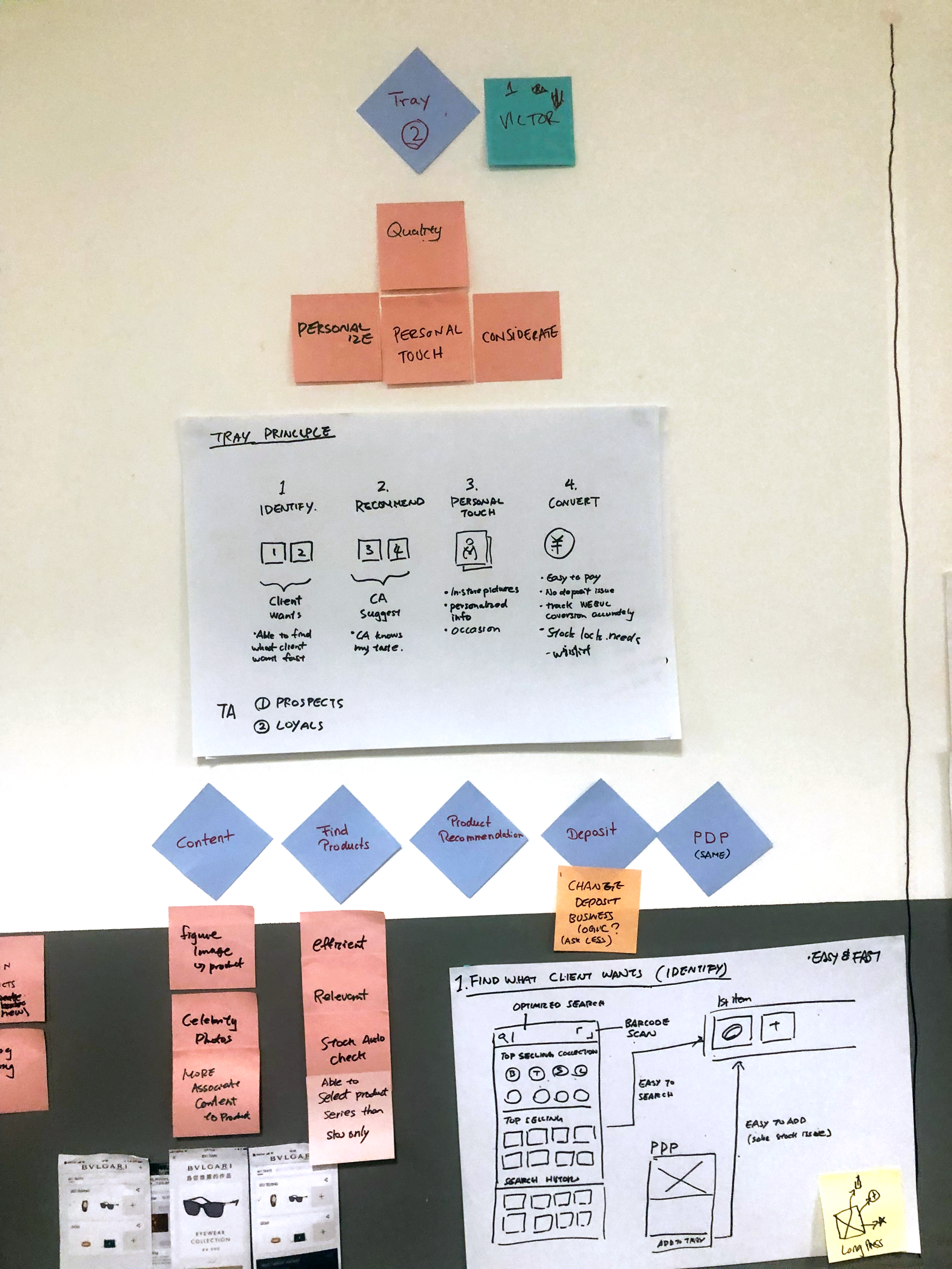
The Tray feature section on the presentation wall.
Outcome
My work helped shift the conversation from "What can our AI do?" towards "What does a coach actually need?"
The result was a clearer product direction centred around:
reducing unnecessary complexity
prioritising actionable insights
making AI recommendations more understandable
designing around real coaching workflows
giving mobile and web distinct roles
creating a stronger foundation for future product development